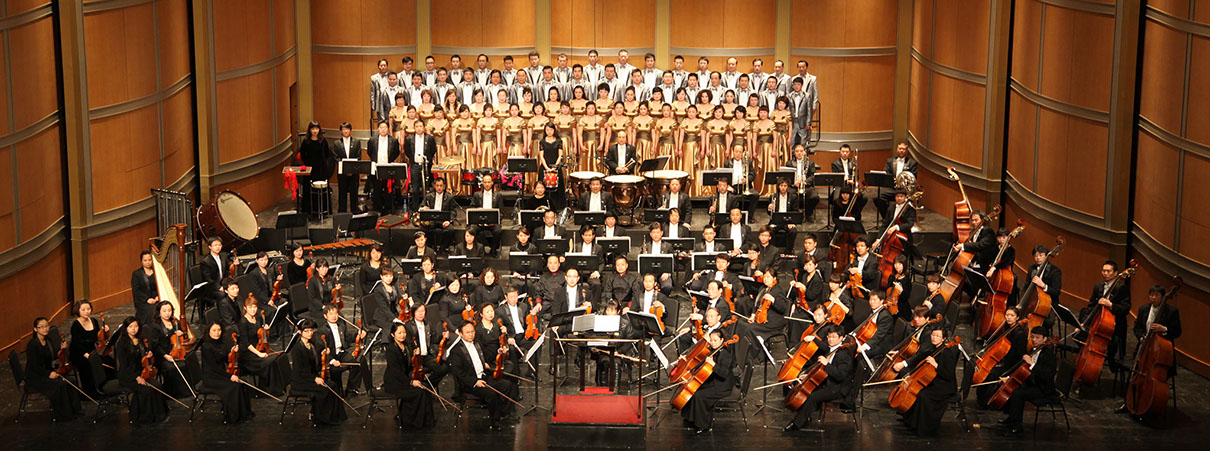
Shanxi Symphony
One of the earliest established professional symphony orchestras in modern China — since 1952.
Teaser
Shanxi Symphony Orchestra
About
A Legacy of Excellence.
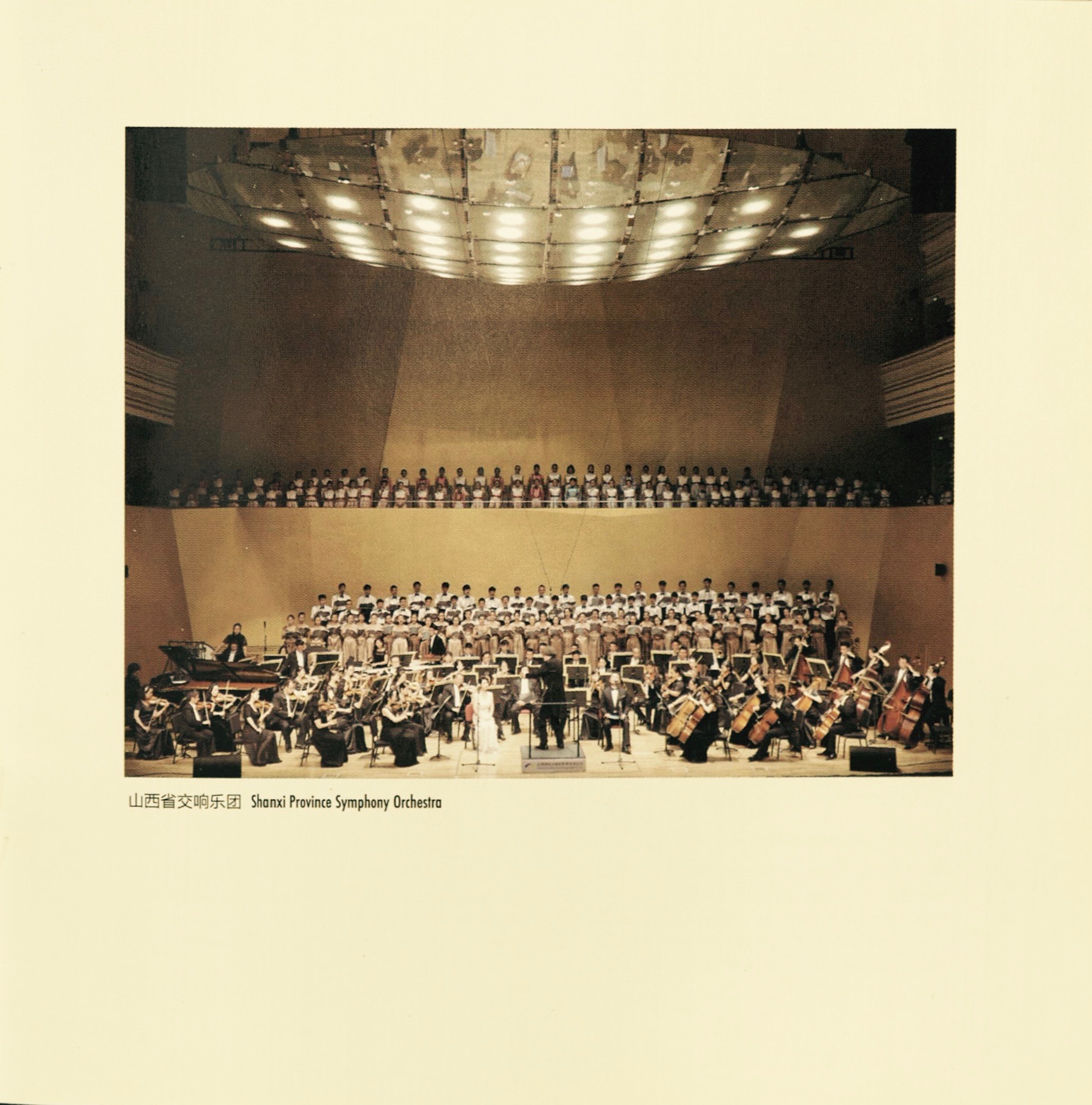
The Shanxi Symphony Orchestra is one of the earliest established orchestras in modern China. It was established in 1952. According to the Shanxi Province Council, the orchestra is an independent professional symphony orchestra and the only professional symphony orchestra in the Shanxi province.
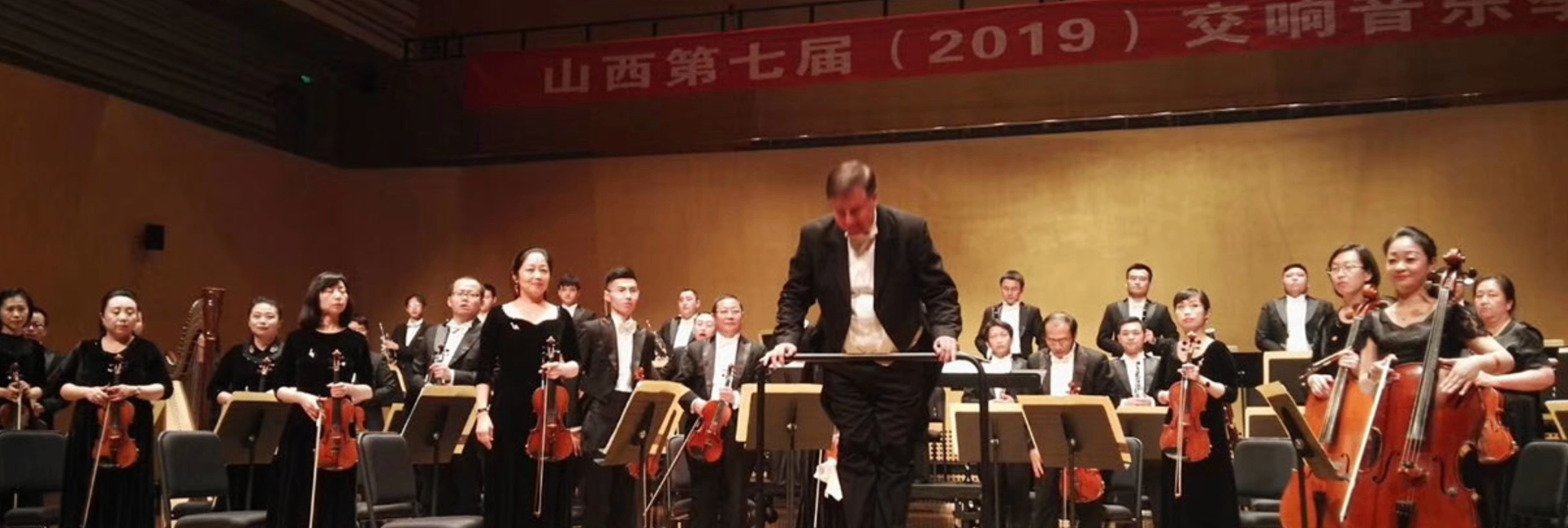
The orchestra maintains long-term cooperative relations with many famous musicians at home and abroad, and famous Chinese and foreign conductors — Li Delun, Huang Feili, Xu Xin, Bian Zushan, Chen Xieyang, Cao Ding, Yi Juanzi, Jiang Jinyi, and Elahiu von Erlenbach.
In 2016, the orchestra launched the only music season in China with Beethoven's symphonic works as the core, and successfully put Beethoven's nine symphonies on stage and presented it to the audience. On invitation of the Chinese Ministry of Culture and the Ministry of Foreign Affairs, it became the first Chinese symphony orchestra to travel to Thailand to participate in Southeast Asian cultural exchange performances organized by the "Chinese Cultural Center" and the "Chinese Culture on Campus". Xinhua News Agency, China Culture News, People's Daily Online, Shanxi Satellite TV and the local mainstream media in Thailand gave reports and praises on that trip.
Repertoire
Award-Winning Works with Wang Xi Lin — A Voice of Modern China
Listen — Wang Xi Lin
Excerpt I
Excerpt II
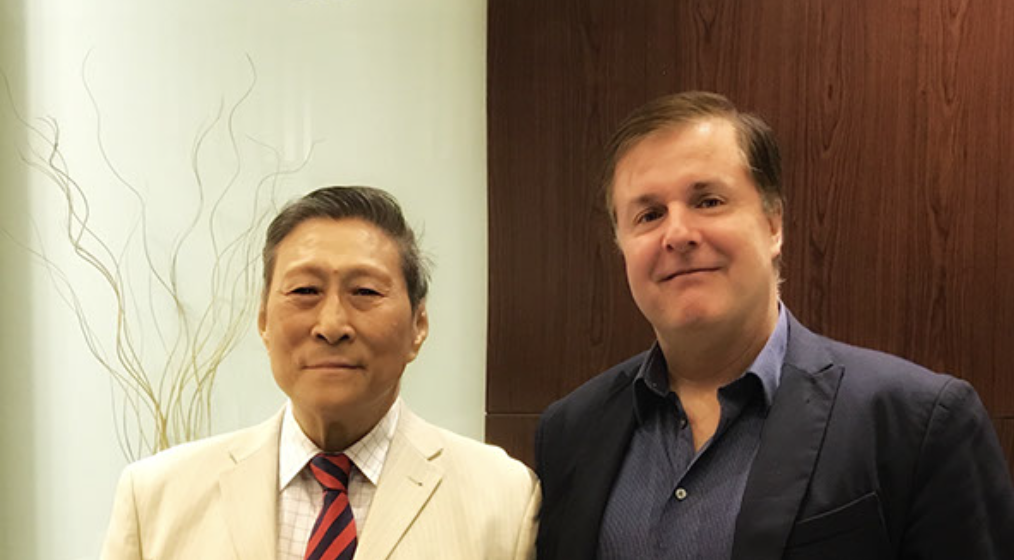
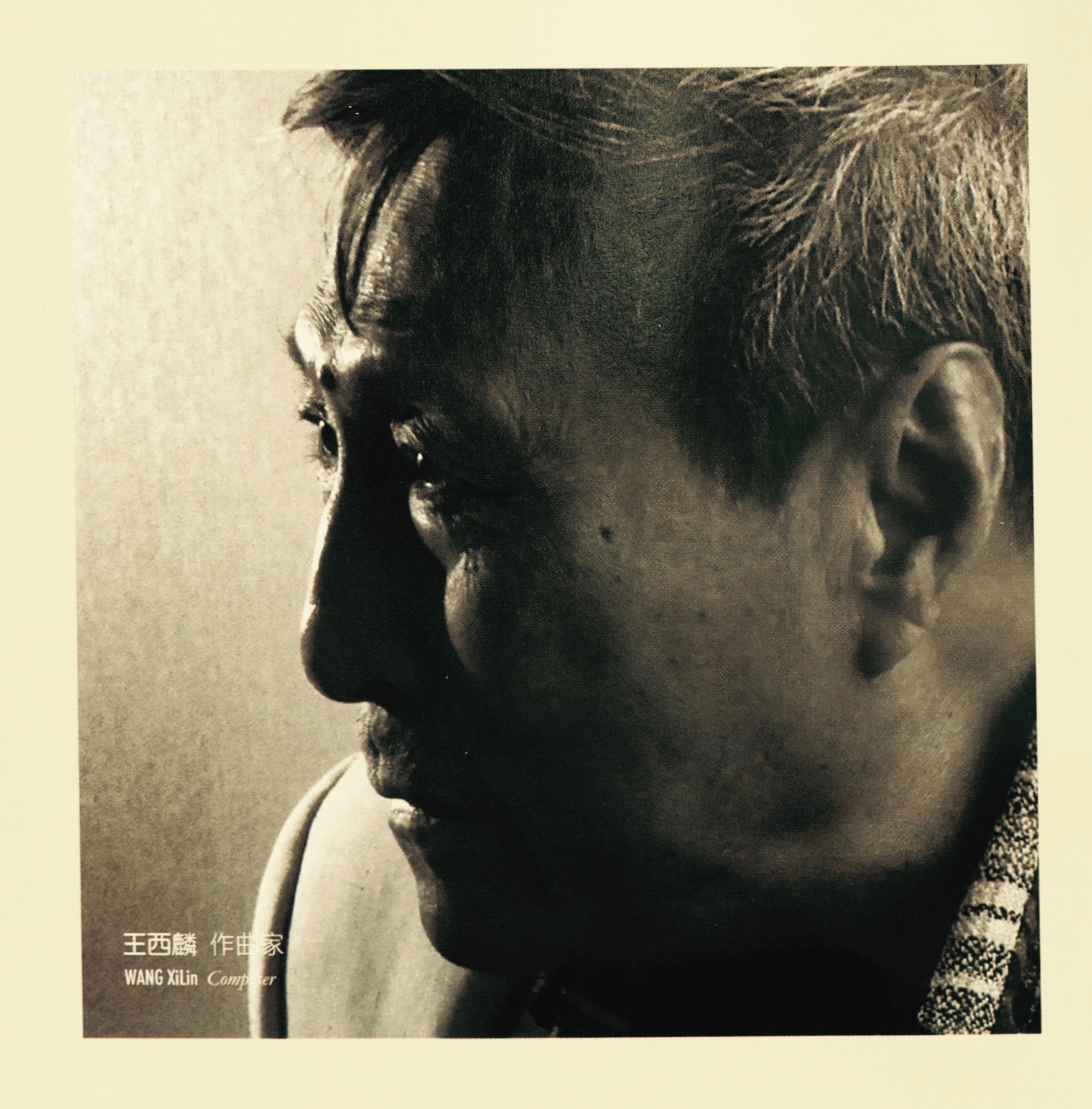
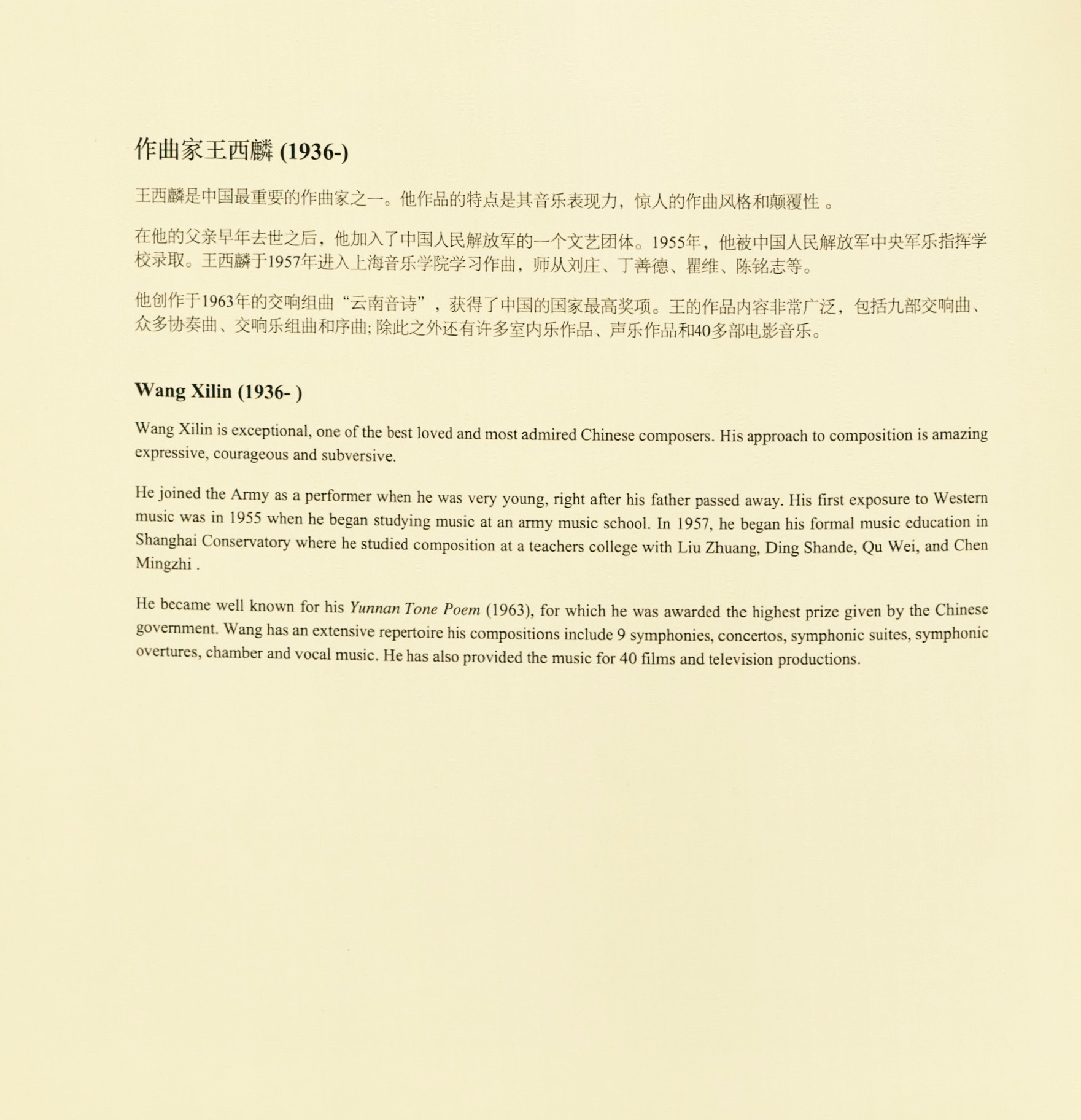
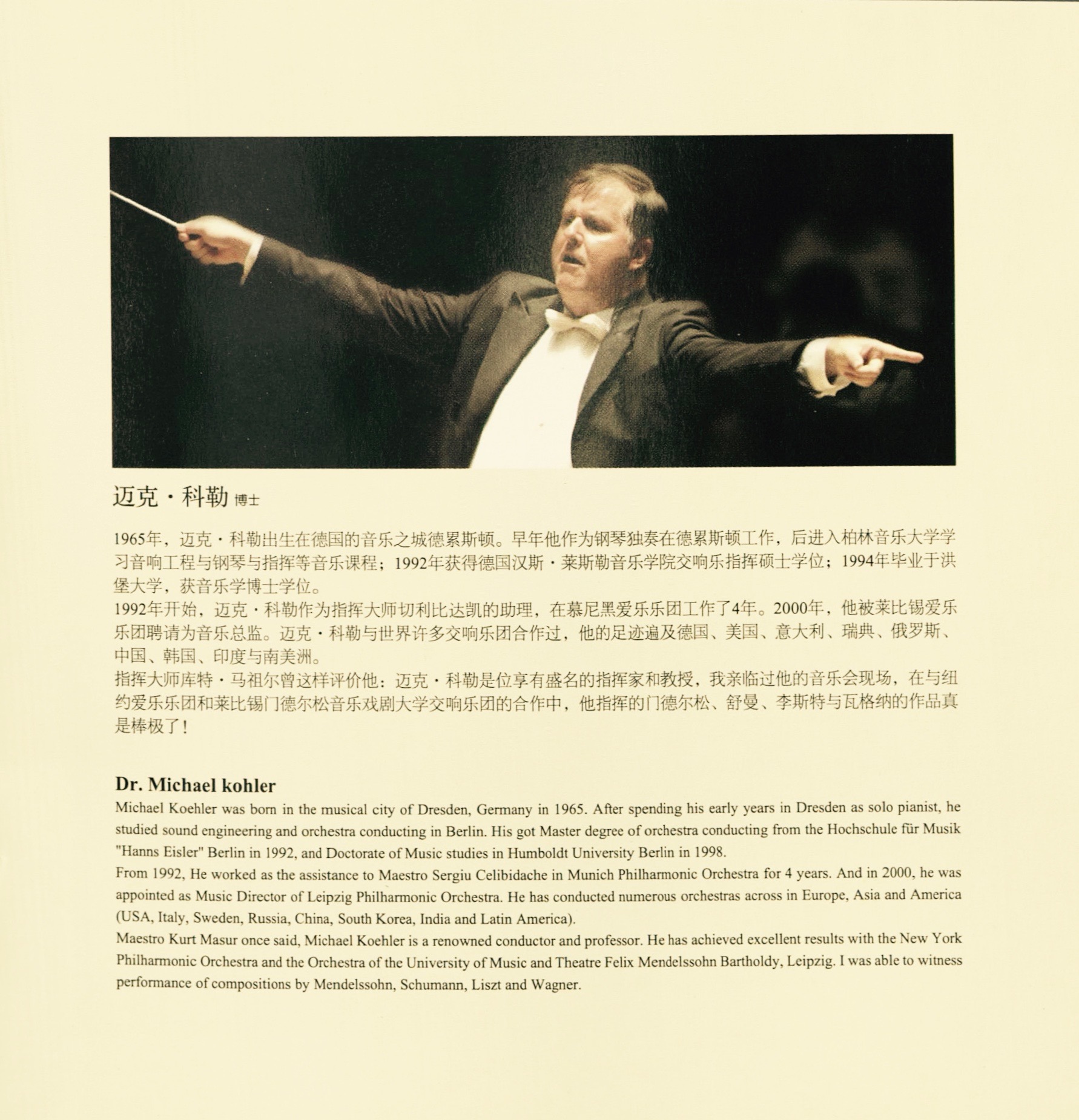
Wang Xilin is a Chinese national-level composer. The Chinese Icon Composer and Maestro Koehler are joined by a close friendship.
He was born in 1936 in Kaifeng, Henan Province, but his family was originally based in Jishan, Shanxi. During the Cultural Revolution, he was criticized publicly in struggle sessions, tortured, thrown into jail, and subject to brutal questioning. From 1971 to 1977, he was appointed as the conductor of Jindongnan Troupe in Changzhi, Shanxi. Wang Xilin was 42 years old. Only then had he the opportunity to encounter contemporary composition techniques of some influential Western composers such as Schoenberg, Stravinsky, and Penderecki, to name a few, whose music was banned from 1949 to 1976. From then on, Wang Xilin taught himself many contemporary composing techniques such as serialism, minimalism and cluster. He applied these modern techniques as well as elements of Chinese regional operas to his own music. Consequently, his music is considered to be embodying the vicissitudes and tragedies of China's contemporary history. He becomes the most unique and significant composer in China.
Wang's oeuvres has included over 60 compositions with opus numbers, including nine symphonies, three concertos for the piano, violin, and voice respectively, and various orchestral and chamber works. In addition, he has also composed more than 40 pieces of TV and movie music, which are without opus numbers. He has won the National Composition Prizes for three times. Both Penderecki and Gubaidulina spoke highly of his music.
Discography
Recordings & Releases
CD I
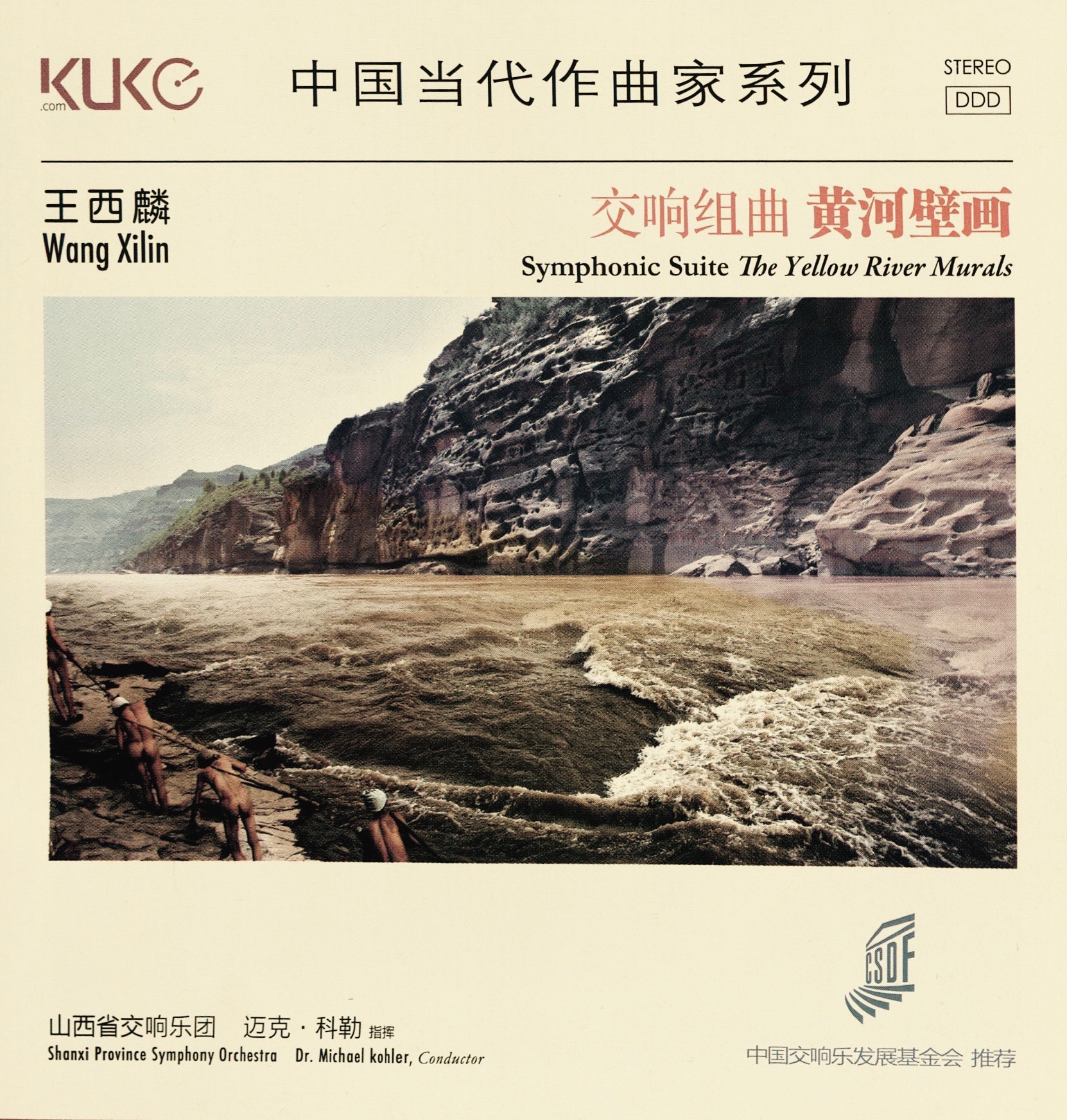
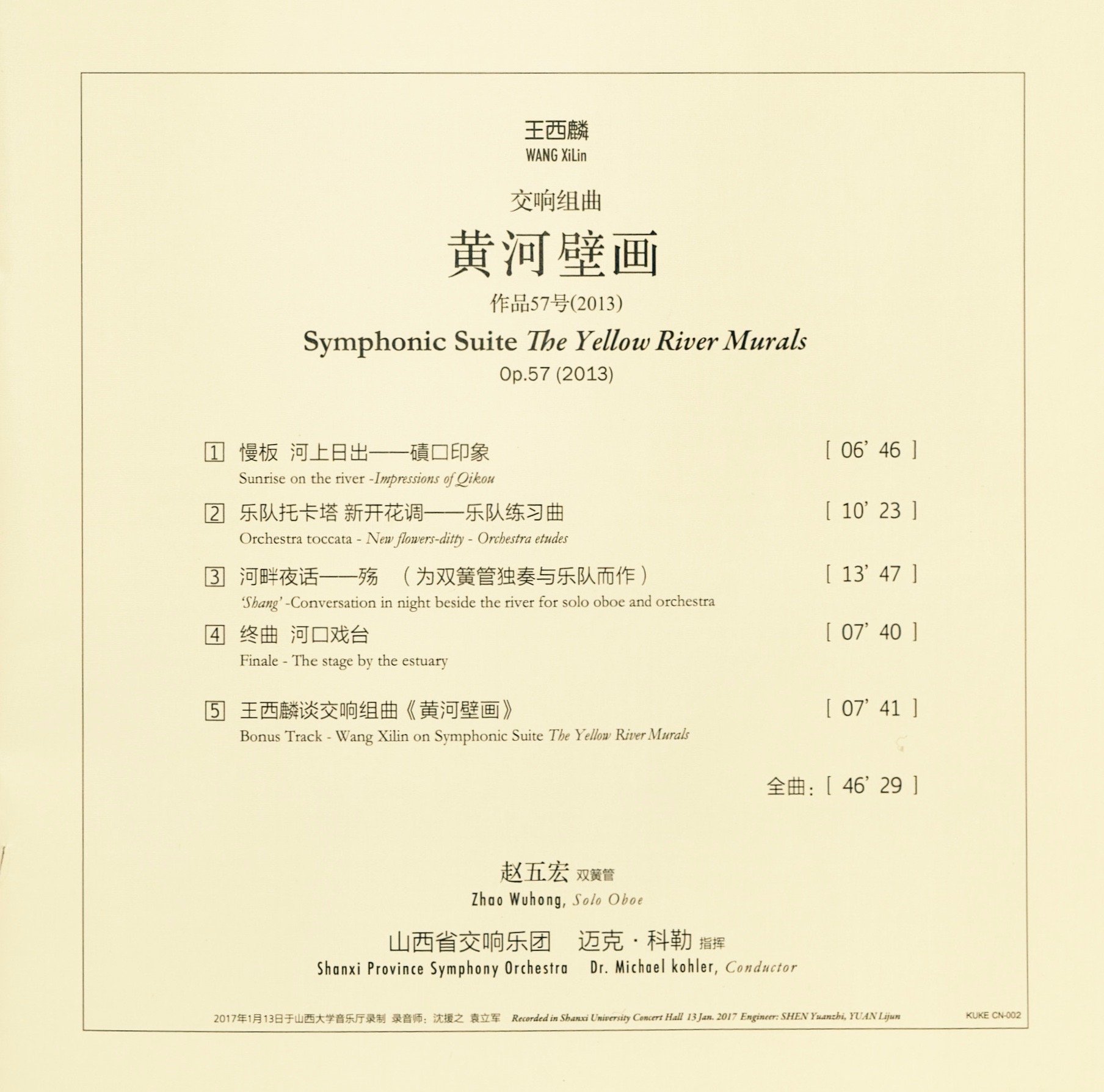
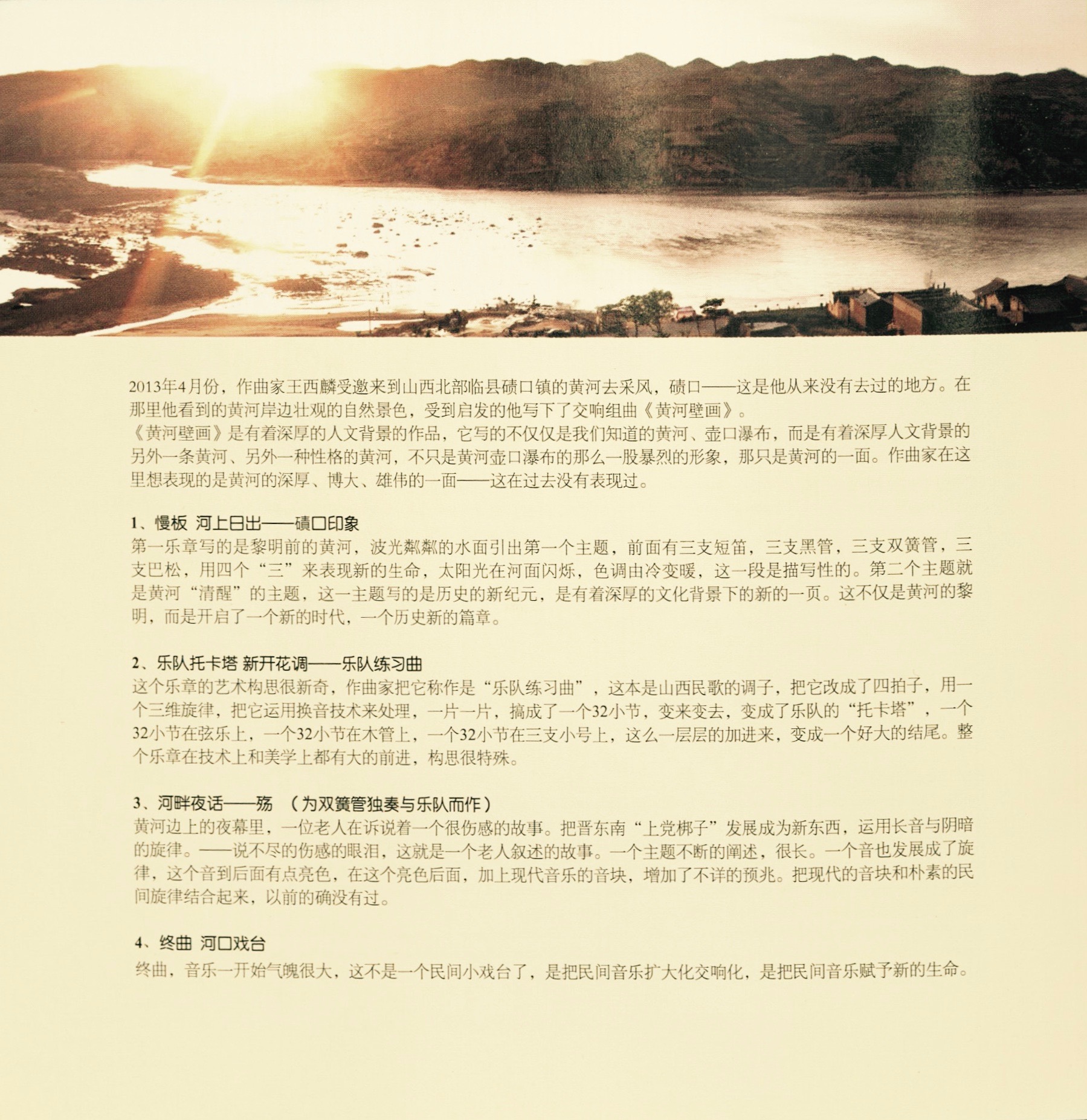
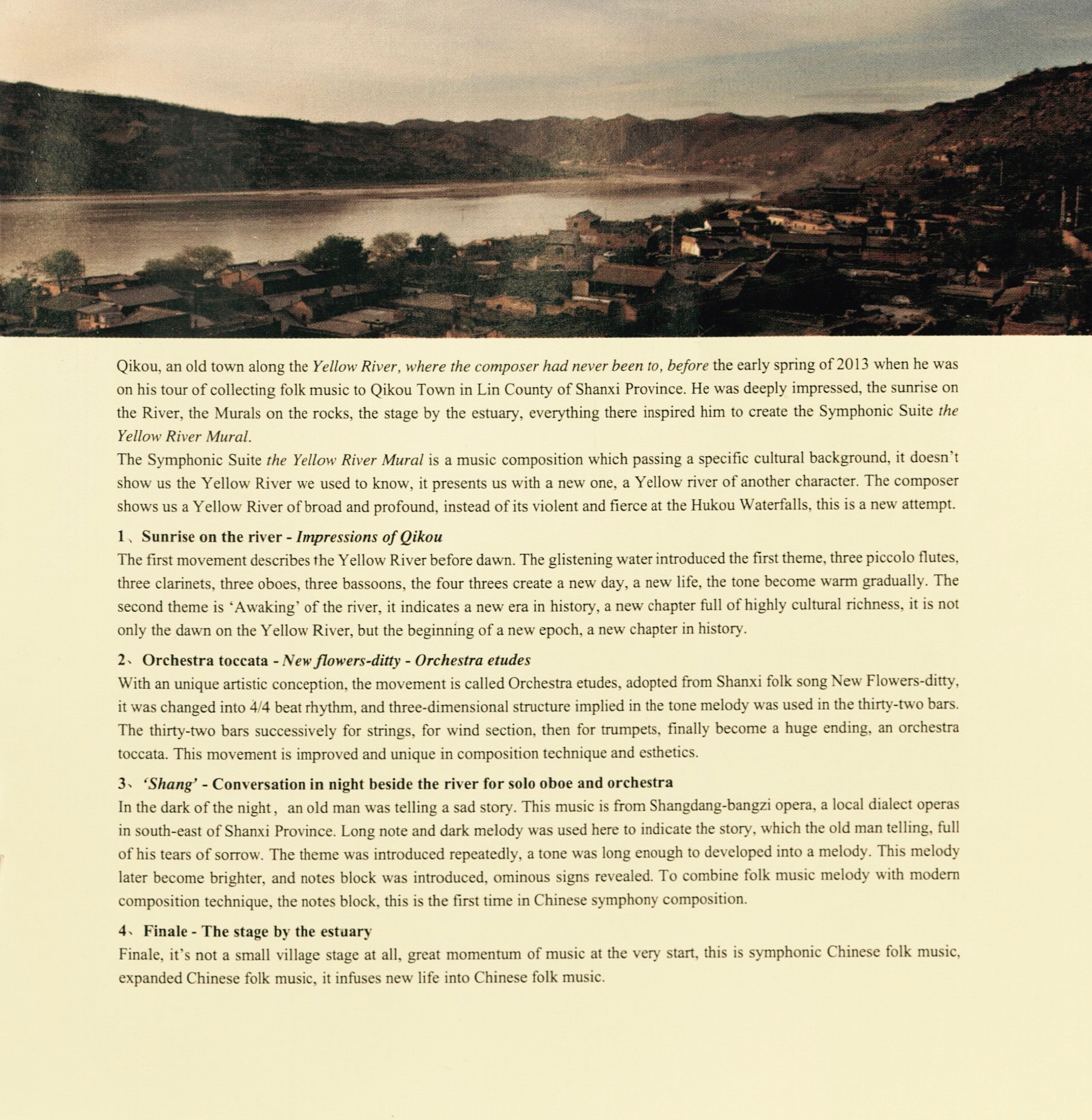
The Yellow River Murals - CMA 2017
The China Music Industy Committee Music Awards (CMIC) honors performers from a diverse range of music genres with the CMIC Music Awards (CMIA) in order to restore the dignity of China's music industry. The former head of Warner Music China, Mr. Song, is a central figure in the development of China's music industry for more than two decades. He has said: "It's been my dream to launch such a music award ceremony like the CMIC Music Awards, which can be called 'fair' and 'authoritative', rather than just a visual showcase." Song's idea was supported by Xu Yi, the former CEO of Sony Music Entertainment China and now the CEO of Taihe Music, who was unanimously voted president of the CMIC Music Awards Committee in March 2017. The jury of the CMIC Music Awards comprises of 101 members of the China Music Industry Committee. According to the International Federation of the Phonographic Industry, China, a new entrant in the global top 10 the previous year, rose to seventh position in 2018. The Symphonic Suite "Yellow River Mural" by Wang Xi Lin won the "Best Classical Original Award 2018", chosen amongst 36 award-winners (amongst Chinese Icon Lang Lang) and over 6,000 candidates.
CD II
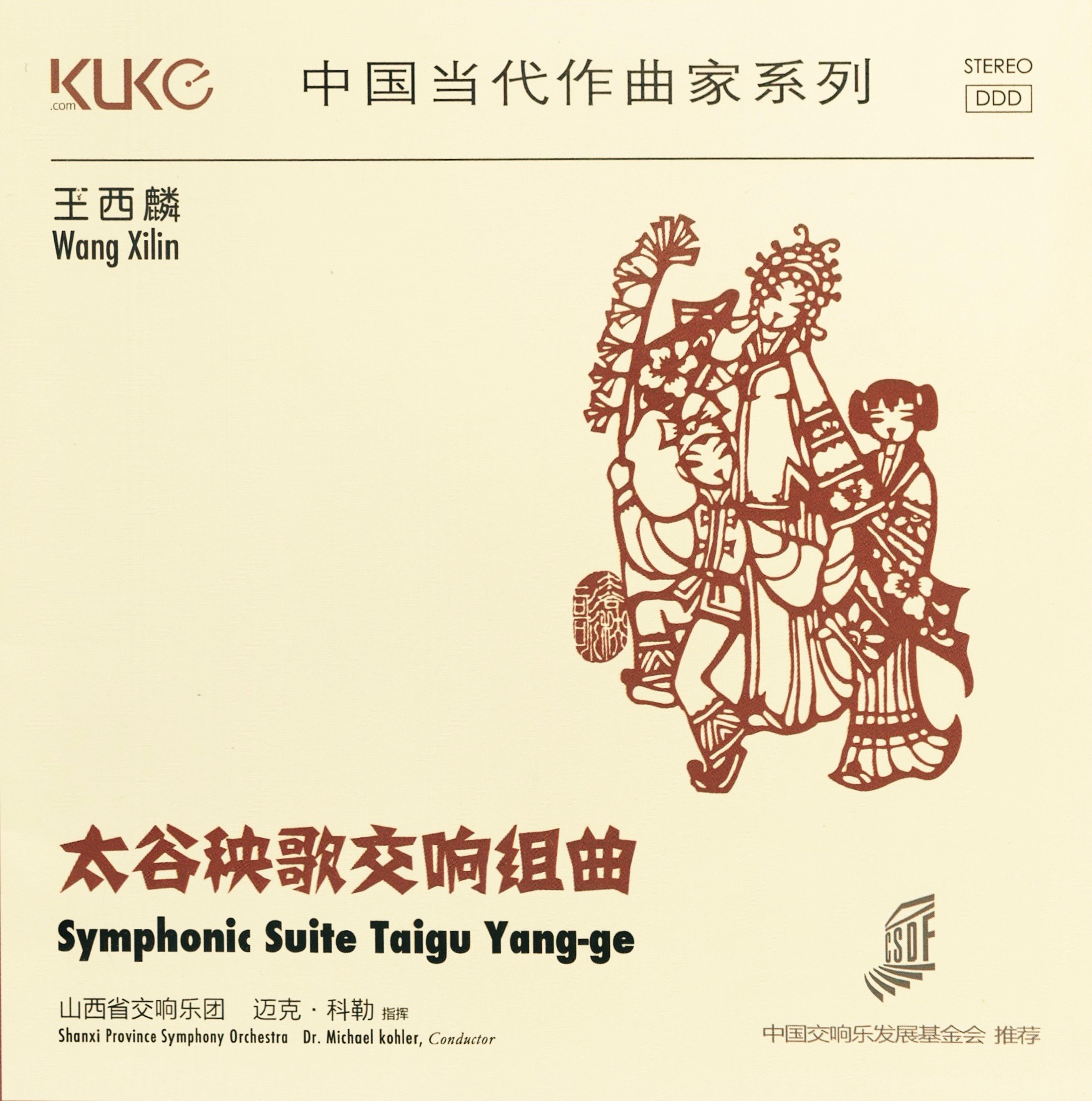
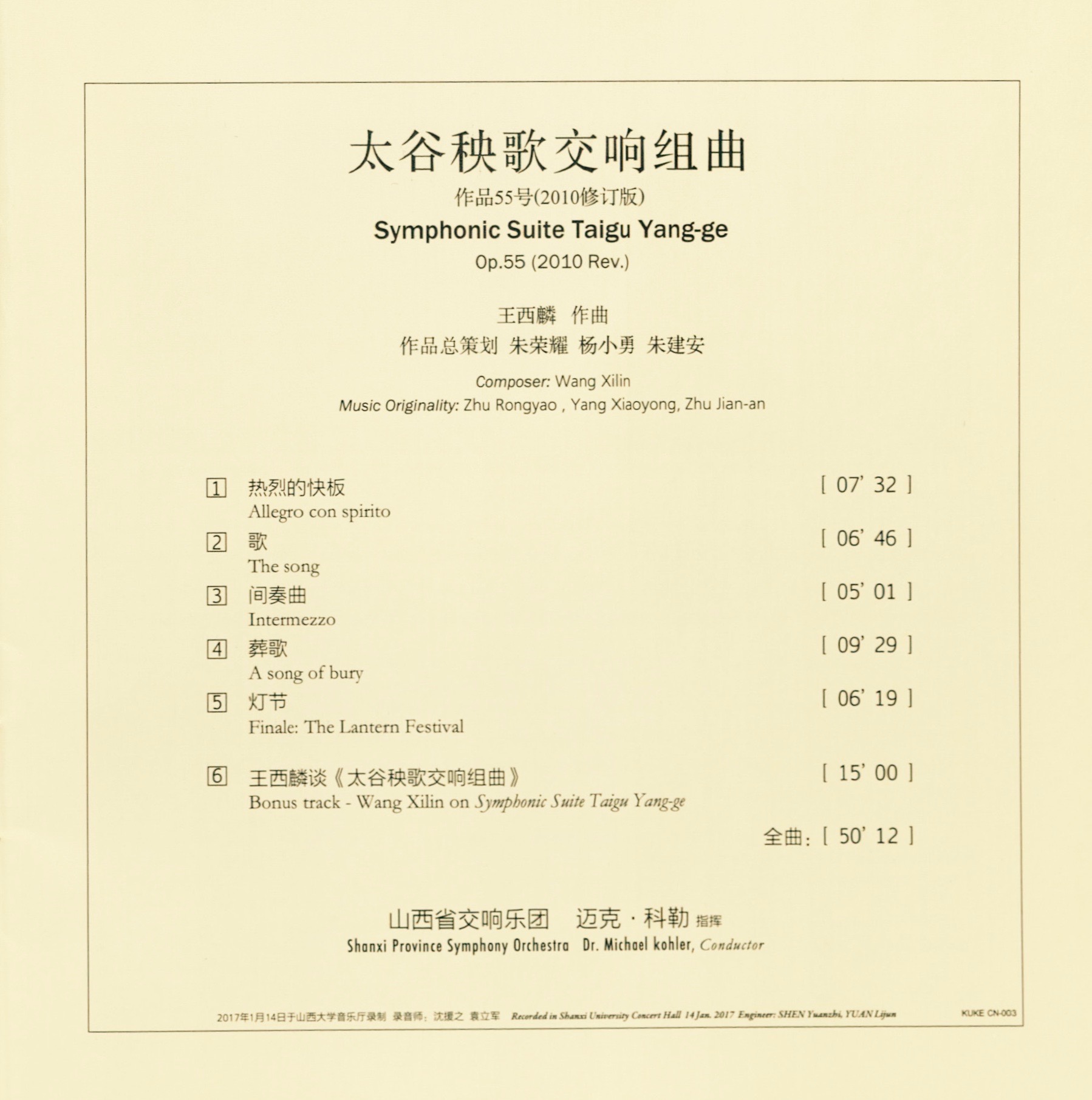
Symphonic Suite — Taigu Yangge
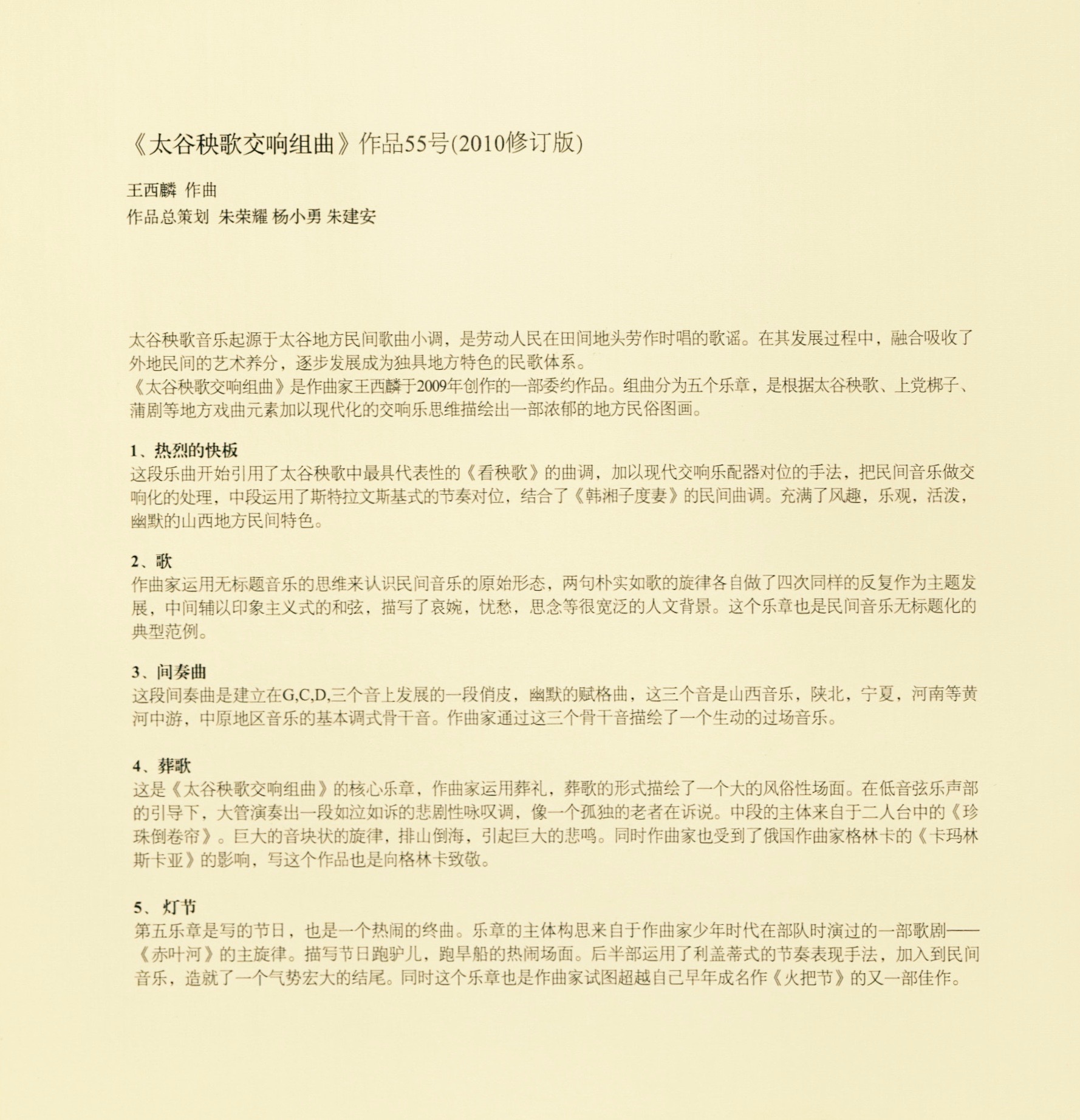
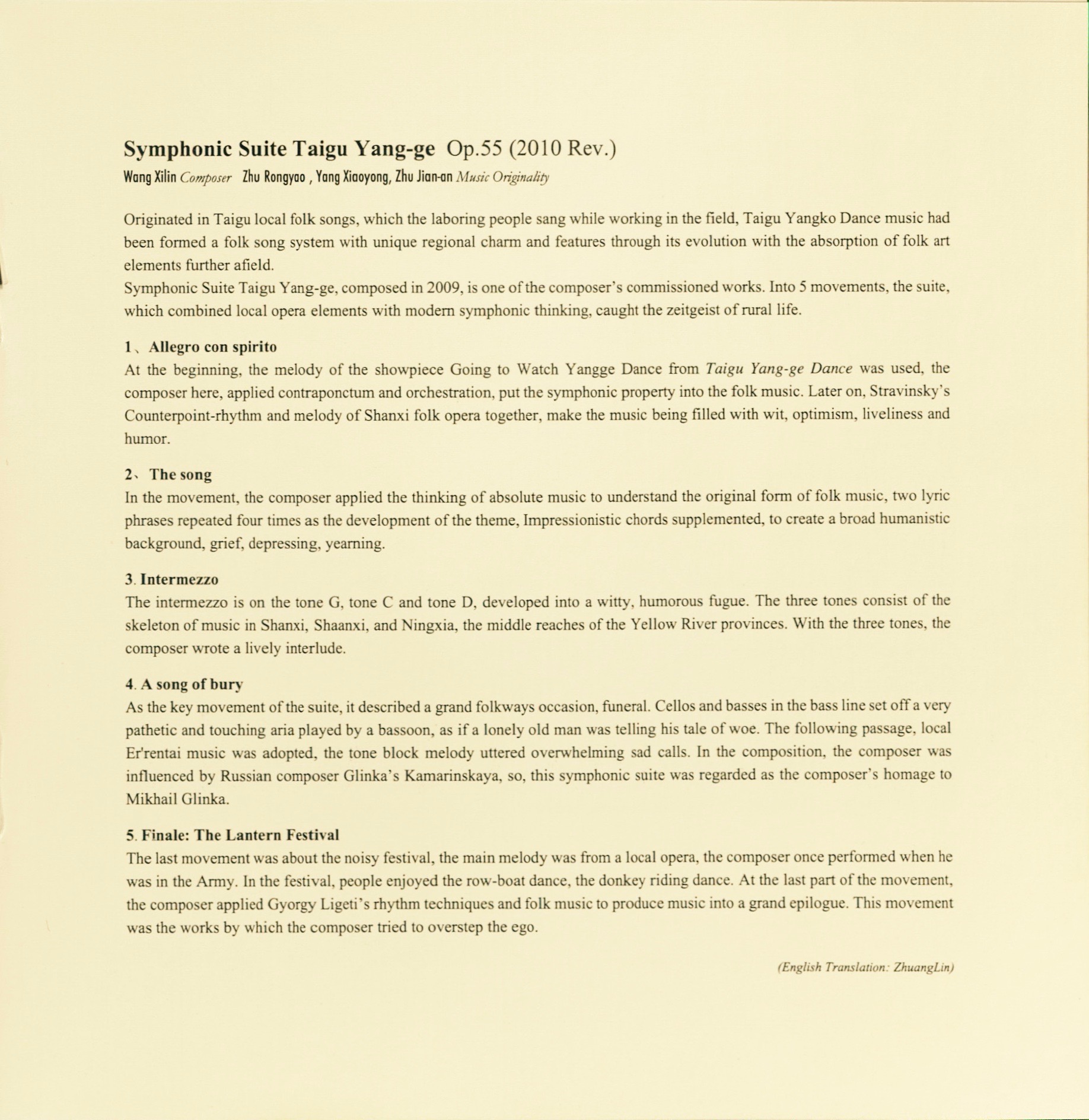
A powerful symphonic work by Wang Xi Lin that reflects the rich cultural heritage of Shanxi province, performed with the full force of the orchestra under Maestro Koehler's direction. Taigu Yangge is a prominent Chinese folk dance and musical tradition originating from Taigu District in Shanxi Province, China. It evolved from traditional agricultural labor songs used to coordinate farming and boost morale, and is now recognized as a National Intangible Cultural Heritage. The cultural and rhythmic motifs of Taigu Yangge have been adapted into classical music. Notably, Chinese composer Wang Xilin composed the internationally recognized Symphonic Suite "Taigu Yang-ge" (2010), which captures the fiery spirit and festive nature of the folk dance. It typically features vibrant, coordinated street dancing, often with colorful costumes, props like silk ribbons or handheld drums, and energetic folk movements designed to pray for good harvests and ward off evil. The tradition incorporates antiphonal singing (call-and-response) and rhythmic folk tunes that reflect rural life, domestic experiences, and romantic sentiments.